
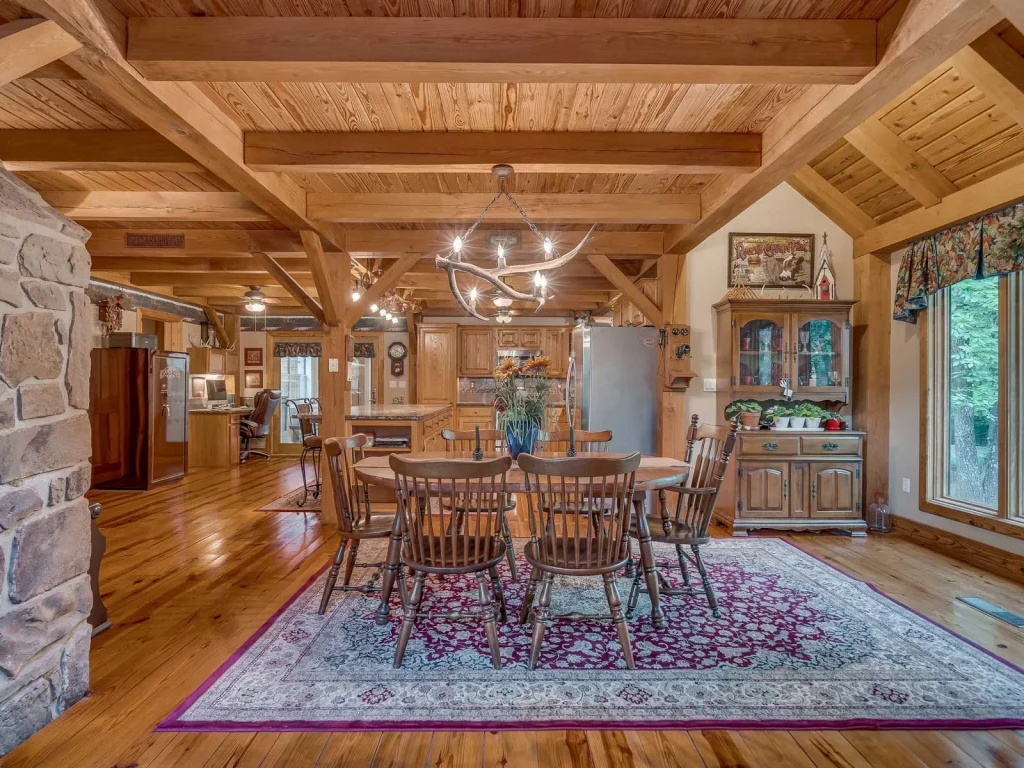
Best Wood for Timber Frame: Pine, Fir, Hemlock or Oak
One of the first things we talk about with a new client is what kind of wood they’re picturing. Some people know right away. Others have never thought about it and want to know what the best wood for timber frame work is. We cut four species in our shop, and any of them can make a good frame. Which one is right depends on the house and the people living in it.
All of our timber comes from sustainably managed forests. The softwoods are eastern white pine, Douglas fir and hemlock. They’re more common these days and easier to work. Oak is less common, but it can make a beautiful frame. Here’s how we’d describe each one.
Eastern White Pine
Pine is an old New England standby. Fresh off the saw it’s a soft, creamy color with mild grain and small knots. Over time, in the light, it usually darkens to a warmer honey shade.
It’s fairly light, it behaves itself as it dries, and it’s pleasant to cut. That’s a big reason it shows up in so many homes around the Northeast. Pine suits a bright room where you want the timbers to feel friendly instead of heavy, like a farmhouse kitchen with white walls and big windows.
One thing to ask about is span. Softer wood sometimes needs bigger timbers to cover a long, open room, so your framer should look at your plan and tell you what sizes it would take.
Douglas Fir
Fir is known for strength and long, straight timbers. The color runs from warm tan to reddish, and the grain is often tight and even.
Since fir comes in good lengths, it’s a common pick when a plan calls for a long span or tall posts. If you’re thinking about a wide great room or a high cathedral ceiling, it’s worth talking over. Fir also has a bit more of a finished look than pine or hemlock. It sits well next to a stone fireplace and dark window frames in a more modern house.
Hemlock
Hemlock goes way back in New England building. It’s usually pale with a slightly coarser texture, and it takes stain and hand finishing well. Steve and Bonnie Toomey went with a hemlock king post frame. We stained it and cut it to look hand-hewn, the way an old frame would have been worked with a broad axe.
Hemlock is a good fit for barns, pavilions and homes with a traditional feel, where a slightly rough surface looks right at home. You can see a few different looks in our gallery.
Oak
Oak is the heavy one of the bunch, in every sense. It’s dense and hard, with bold grain that really comes out under a simple oil finish. Oak frames aren’t as common as they used to be. It’s harder to find, and it takes more time and more sharpening to cut. The folks who choose it usually love the look and are glad to plan around the extra work.
The Sequoyah is one of our oak frames. It’s a queen post and common rafter design, and some of the knee braces came from trees with a natural curve. We hunted those trees down, slabbed them in the woods with an Alaskan chainsaw mill because they were too big to move whole, and carried the slabs out one at a time. The client called them “whale tails.” With a coat of boiled linseed oil, that oak grain has a nice glow.
If oak is on your mind, bring it up early. Finding the timber, the sizes needed, and the cutting time can all affect your schedule and budget.
Other Things That Matter
The species gets most of the attention, but a few other things shape how the frame looks and lives.
Every big timber dries and moves over the years. You’ll see cracks along the surface called checks. They’re a normal part of drying and usually just cosmetic. Ask your framer how they plan for that in the joinery and how your species tends to behave.
Finish changes things too. We usually use boiled linseed oil on residential frames, which brings out the grain. A stain can shift the color a lot, so ask to see samples before you decide.
Most frames get wrapped in SIPs, which keeps the timbers inside and out of the weather. Your overall design matters as well. Long spans, snow loads and how much of the house is timber all play into which wood makes sense. Our post on what drives the cost of a timber frame home talks about how those choices fit together.
A good place to start is just asking yourself whether you want a light, airy room or something darker and richer, and whether you like quiet grain or bold grain. That alone narrows it down a lot.
If you’d like to talk wood with us, call (603) 309-8793 or send us a message, and we’ll tell you what we know about each one.


