Timber Frame Maintenance: Caring for Exposed Timbers
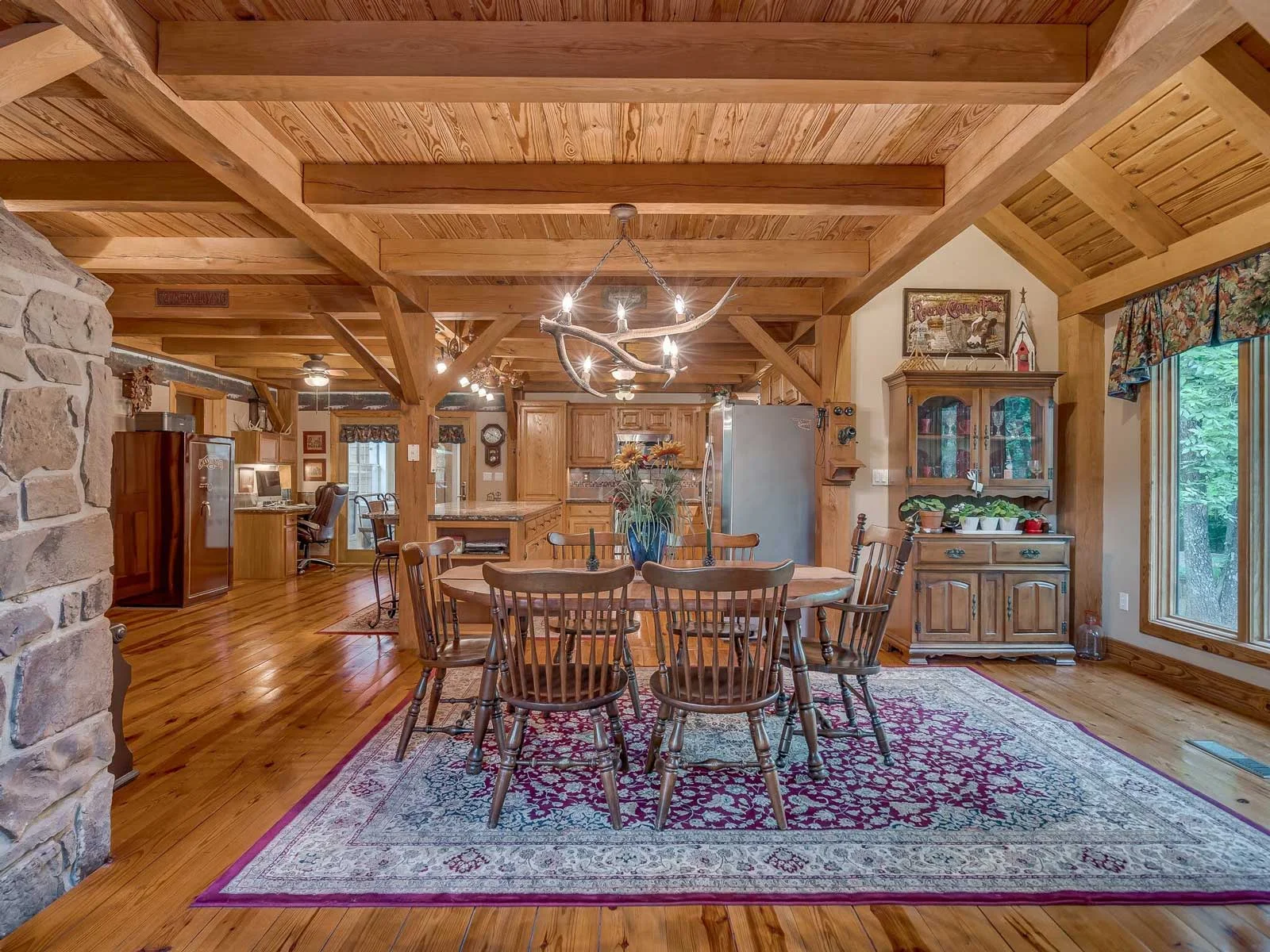
A question we hear a lot is “So what do I have to do to keep it looking like this?” The real answer is a lot less work than that.
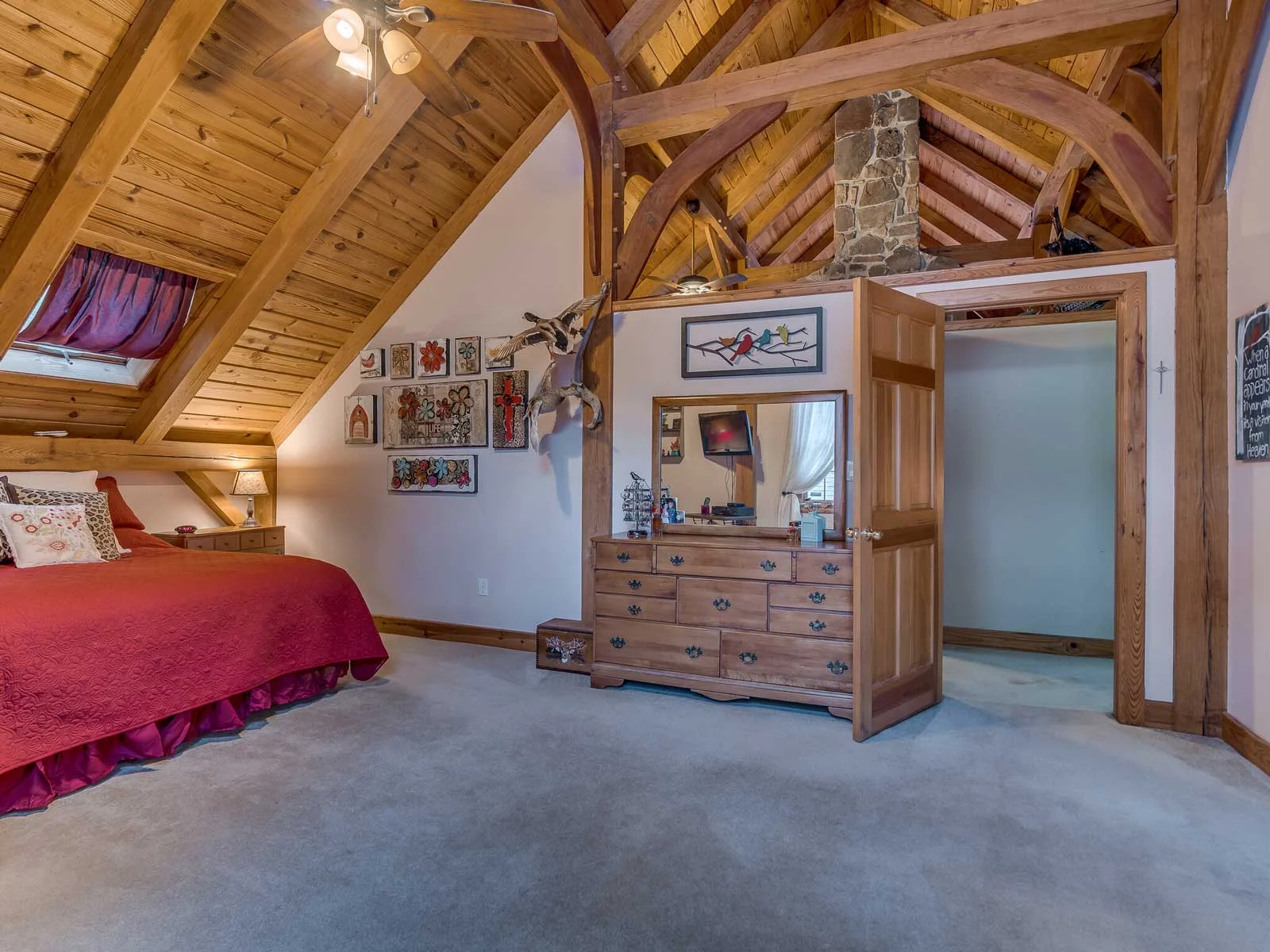
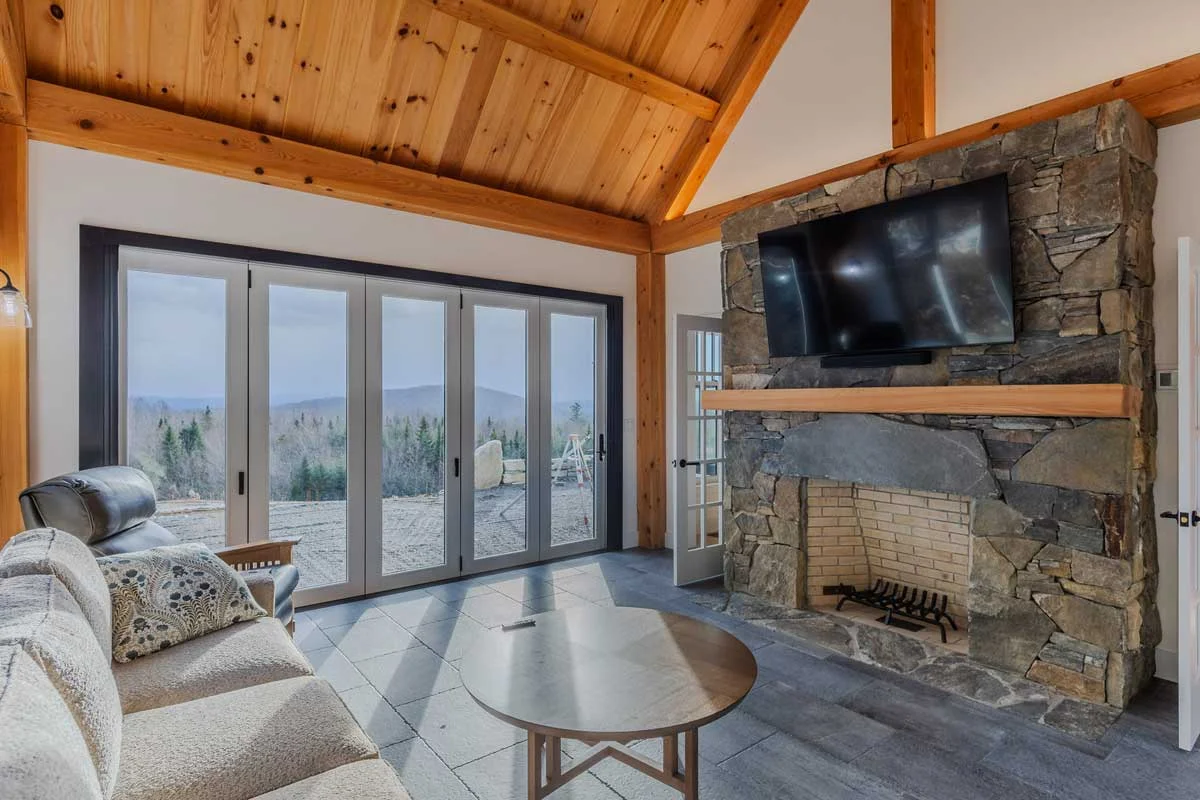
Timber frame maintenance on the inside of a house is mostly dusting. The frame lives in the same warm, dry air you do. Rain and sun are what wear wood out, and once the frame is closed in under a roof and wrapped in walls (we pair a lot of our frames with SIPs), neither one gets at it.
The First Winter
When we cut a frame in the shop in Alstead, those timbers still hold a good bit of water. The first heating season dries them out. They shrink a little, and cracks called checks open up along the grain.
A lot of folks want to fill those checks right away with caulk or wood putty. We would ask you to wait. The wood keeps moving for a while, and filler tends to work loose and fall out, or it ends up looking worse than the crack ever did. We go into the whole thing in our post on checks, cracks and movement in timbers.
What We Put on the Wood
On most of our homes we finish the timbers with boiled linseed oil. It soaks into the wood instead of sitting on top like a coat of varnish. That means nothing to peel or flake down the road, and when it needs a refresh you just wipe on more. No sanding off an old layer first.
It also brings the grain up nicely. On the oak frame for The Sequoyah we used linseed oil for that reason, to show off how tight the oak grain is.
Not everybody wants that look, and that’s fine. Some clients go with a stain or ask for the timbers to look hand-hewn. If you have something in mind, bring a photo when we sit down to design. It is a lot easier to plan a finish before we cut than to change it after the frame is standing.
Keeping Up With It
Every few months, run a soft brush on an extension pole along the tops of the beams. Dust settles on anything flat, and spiders like the corners where a brace meets a post. Skip the wet rags and spray cleaners. Water and strong soap can raise the grain or leave a mark.
Once a year, pick a bright afternoon and walk the house looking up. Look for pale, dry patches where the oil has worn thin. Those usually show up near big south-facing windows. Also keep an eye out for dark stains that could mean a roof leak, little piles of fine sawdust that could mean bugs, and any peg that looks like it has backed out. Most years you won’t find a thing.
Every several years, oil whatever looks dry. There is no need to do the whole frame on a schedule. Wipe on a thin coat with a lint-free rag, let it sit a bit, and wipe off the extra. Go light. Too much oil stays tacky for weeks.
One thing we always tell people. Rags soaked in linseed oil can heat up and catch fire on their own as they dry. Lay them flat outside until they are dry, or drop them in a metal can full of water. Never ball them up in the trash.
Day to Day Wear
Most scuffs blend right in, and a little wear suits a timber frame. A bad scuff will usually soften with fine steel wool and a dab of oil.
A water stain is a different story. If it is under a valley or a skylight, call a roofer first. Once the leak is fixed and the wood is dry, a light sanding and some oil will usually take care of the mark.
Small screws in a big beam won’t hurt anything. Just don’t cut, notch or drill into a joint or a brace, since those are doing structural work. If you want to hang something heavy like a chandelier, ask us first and we’ll tell you where it can go.
Outdoor Frames
Porches, pergolas and pavilions are another matter. They see sun, rain and snow every day, so they need more looking after. Check the finish every year and recoat with an exterior product when it starts to look dull. Keep post bottoms up off the ground or concrete so water can’t wick into the end grain. If you are thinking about something for the backyard, our post on pergolas, pavilions and porches is a good place to start.
If you have questions about which species or finish would suit your place, get in touch or call us at (603) 309-8793 and we’ll talk it over.