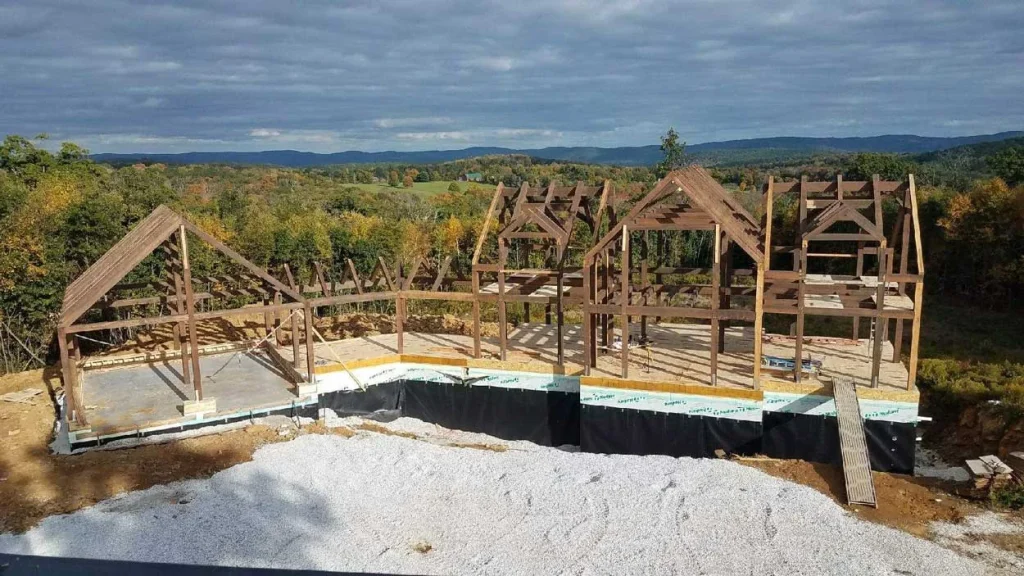
Timber Frame Shipped to Another State: How It Works
We hear some version of this on the phone: “You’re in New Hampshire, and I’m in Tennessee. Can that work?” It’s a fair question. Our shop is on Forest Road in Alstead, and a lot of the land we build on is a long way from here. We’ve raised frames in more than 36 states, so we’ve had plenty of practice answering it.
The short version is yes. The longer version is below, along with the parts you’ll need to line up on your end.
The Work Happens in the Shop
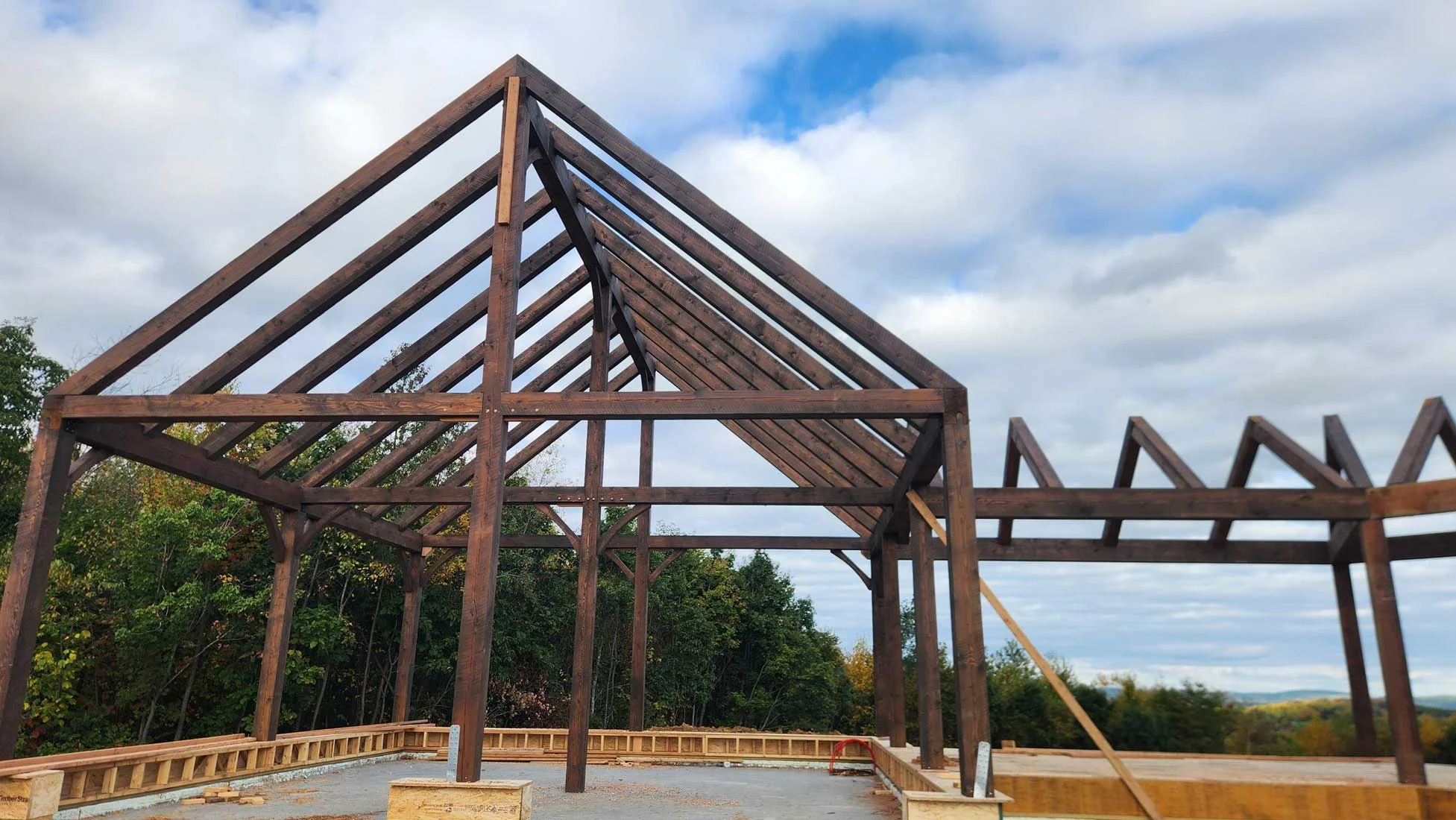
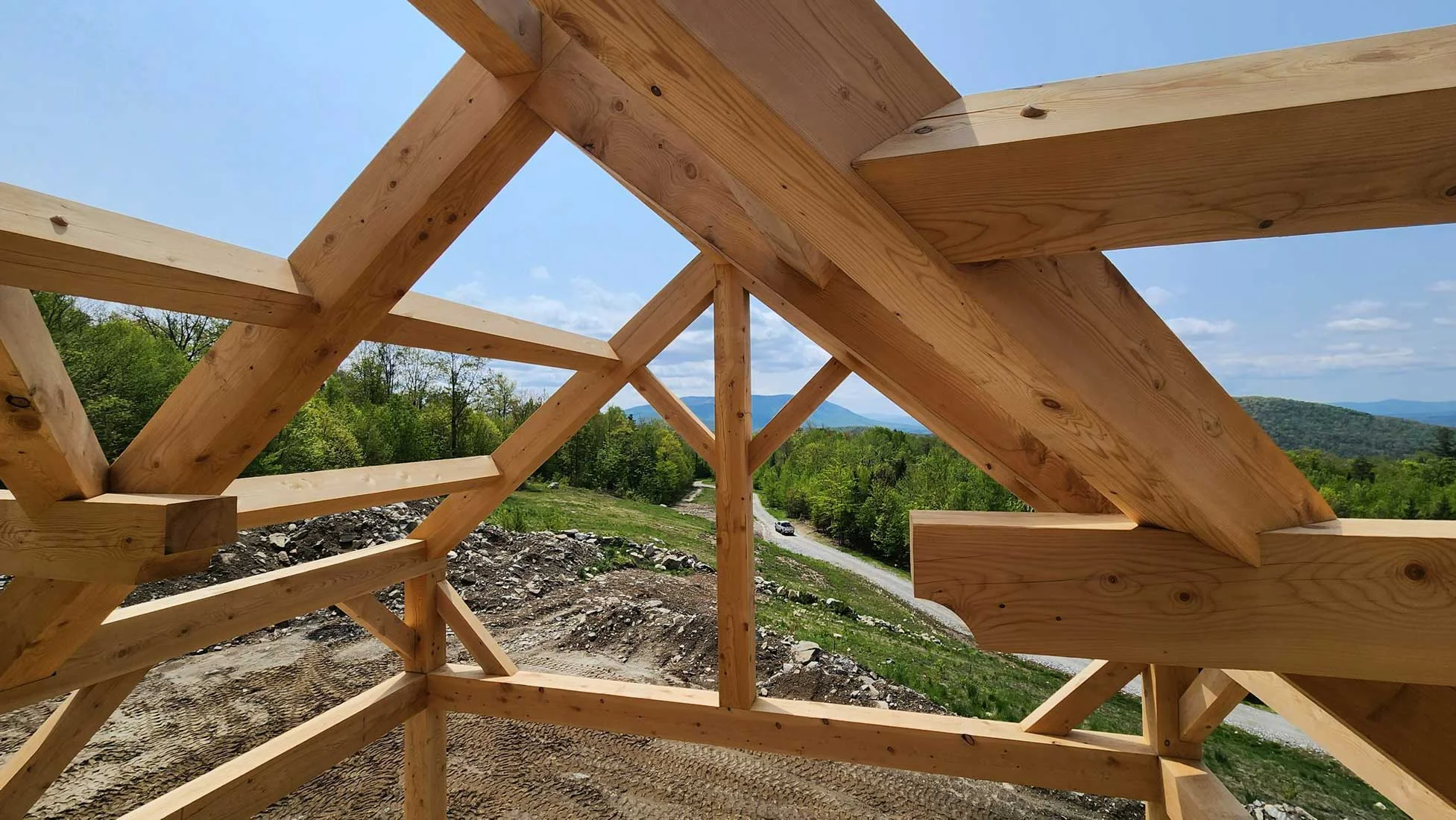
A timber frame isn’t built on your lot the way a stick house is. All of the joinery is laid out and cut here, with the timbers up on horses in the shop. We cut every mortise and tenon by hand, with a chisel and a lot of checking against the layout. Each piece gets marked so the crew knows which bent it belongs to and which way it faces. By the time we load the truck, the frame is a big stack of labeled parts that are meant to go together one way.
That’s why distance doesn’t change the quality much. The careful part is done before the trip, not after.
Loren is a good example. He lost his home to a fire in March 2018 and came to us to cut a new frame for a site about 1,700 miles away. When it went up, he said it came together “without one miss cut beam.” Our crew stayed on to help with his SIPs, porch roof and ceilings.
Before Anything Ships
A long-distance project starts the same way a local one does. We talk about your land, your budget and how you want to live in the place. Then we work with you and your designer or architect on a plan that’s structurally sound and fits you.
Once the design is settled, we put together a proposal and go through it with you. This is where the travel details belong. Who unloads the timbers? What will our raising crew take care of when they get there? What has to be done before we show up? If you want the whole sequence from sketch to raising, we wrote about the timber frame building process.
Your Local Builder
We design the frame with you, cut it and raise it. We don’t pour foundations, run plumbing, wire houses or act as your general contractor. You’ll want a local builder for all of that, and the sooner they’re involved, the better things go.
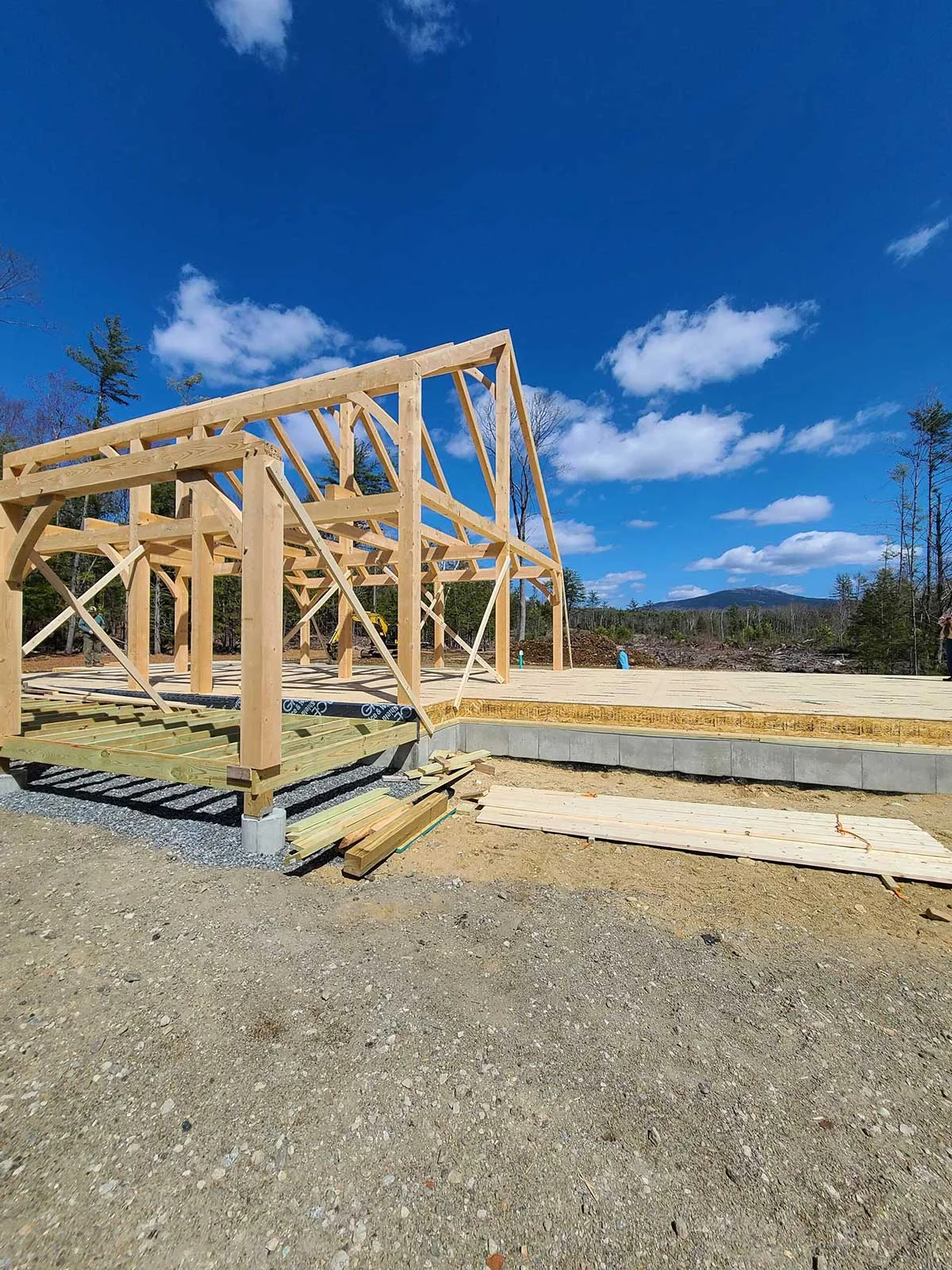
The foundation is the big one. The frame has to land on a foundation that matches the drawings, so your builder and Bruce should be talking well before the trucks roll. Your builder will also handle permits, utilities and the finish work that comes after the raising. Ask them to walk the site with you and think about where a long truck and a crane are going to sit. A soft, narrow driveway in mud season can cost you a day.
Snow, Wind and Codes
A frame headed for snow country is built differently than one going somewhere mild. Roof loads and wind change the size of the timbers and how the joints are laid out. Your local building department will have its own rules, and those belong in the design from the start.
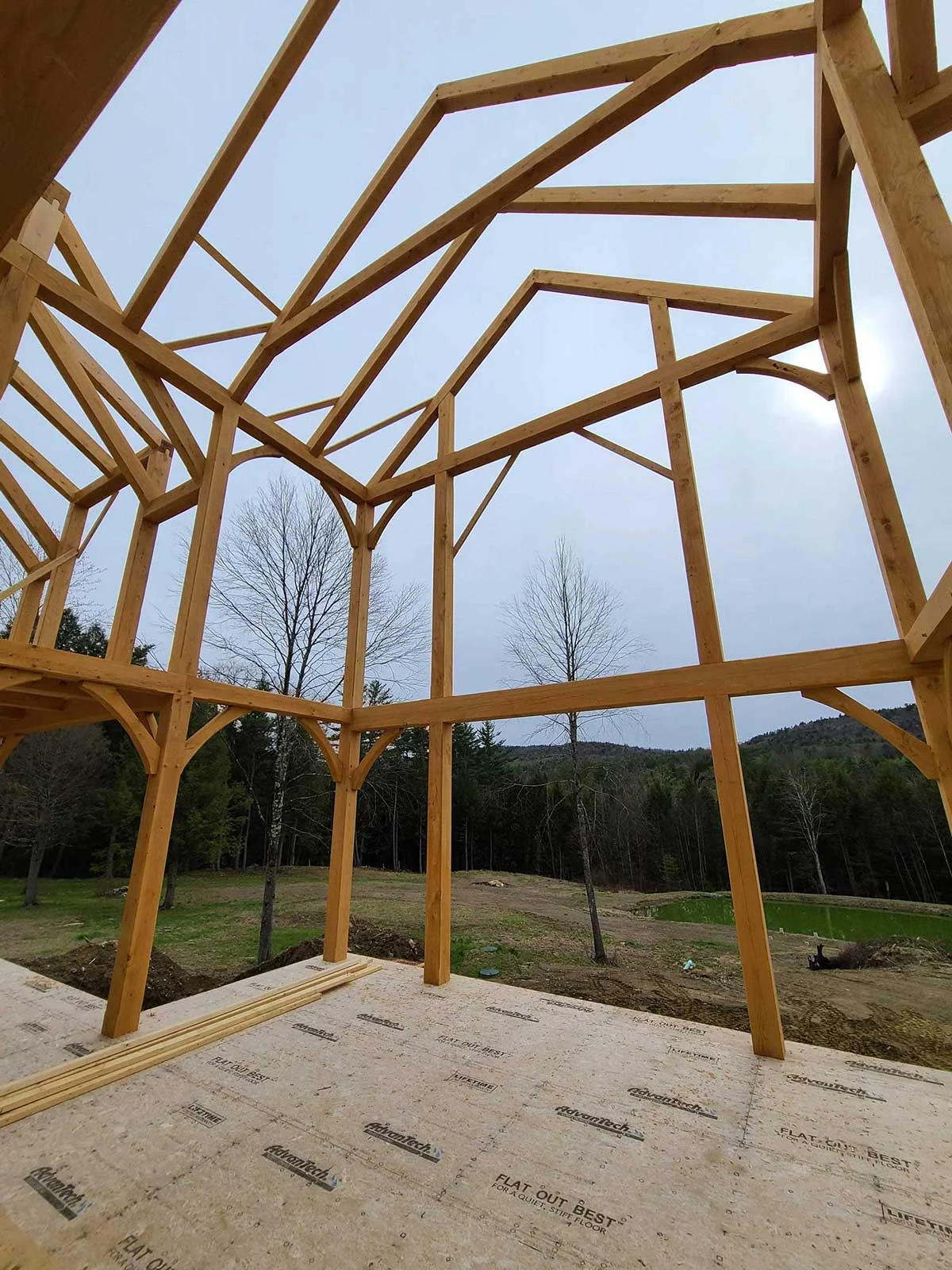
We know snow pretty well up here. On the Brookline, the owners wanted a 24-foot living space with no posts in the way. We staggered the roof peak and layered two heavy plates together to carry it, and that gave them a row of clerestory windows as a bonus. For more on regions and weather, see our post on whether timber frames suit every climate.
Raising Day Far From Home
When the timbers arrive, the foundation should be done and the deck in place if your plan has one. The crew puts the bents together on the deck, the crane lifts them, and we drive the oak pegs that pull each joint tight. One of our clients made a time-lapse of their raising, and it’s fun to watch the frame go from a pile on the ground to the bones of a house. We wrote more about what raising day looks like if you’re curious.
Talking to the People Who Cut It
Distance makes communication matter more. When you call us, you get Bruce, Garrett or Chris, the same folks who lay out, cut and raise the frame. If your builder has a question about a post pocket or an anchor, the person who answers is the one who cut that post.
Whoever you hire, ask how many frames they’ve raised out of state, how they handle a damaged piece, and what happens if weather pushes back the raising. Ask for references from people who built far from the shop. We’re happy to pass along a few.
If your land is a few states away, drop us a line or call (603) 309-8793 and we’ll talk through how a frame from our shop would get to you.